Most radiology teams now juggle five or more imaging vendors because legacy PACS cannot handle multi-site studies without repeated logins and separate archives. The friction shows up as missed comparisons, repeated scans, and radiologists losing minutes per case just moving between windows.
By the end of this article you will know the five concrete criteria that separate workable platforms from the rest, see how Medicai and four other vendors score on each point, and walk away with a ranked shortlist that matches your case volume and IT constraints.
What to Look For in Enterprise Imaging Platforms for Diagnostic Viewing in 2026
Enterprise imaging platforms in 2026 must deliver secure, standards-based diagnostic viewing across distributed care networks while reducing IT overhead.
Zero-footprint web viewers now support lossless JPEG and 3D reconstruction without requiring client software installation. These thin client systems allow radiologists to access full-resolution studies from any workstation with a browser.
Native HL7 FHIR and DICOMweb connectivity enables EMR integration and RIS integration without custom middleware. WADO-RS endpoints provide standardized image retrieval that works across different vendor systems.
Role-based access controls combined with complete audit trail documentation meet HIPAA compliance requirements for every image access event. Administrators can track who viewed which study and when.
Automated prefetching pulls relevant priors before radiologists open current studies. Modality worklist support ensures proper patient identification and procedure matching across connected devices.
Multi-modality hanging protocols display images consistently regardless of source equipment. Structured reporting templates standardize findings documentation and facilitate data extraction for quality metrics.
Image compression options preserve diagnostic quality while reducing storage and transmission costs. Standards-based algorithms maintain pixel fidelity required for accurate interpretation.
AI-assisted diagnosis plug-ins connect with existing workflows and include latency optimization for low-bandwidth connections. On-premise or hybrid deployment models let organizations choose between cloud PACS convenience and local data control.
1. Medicai - Best Overall
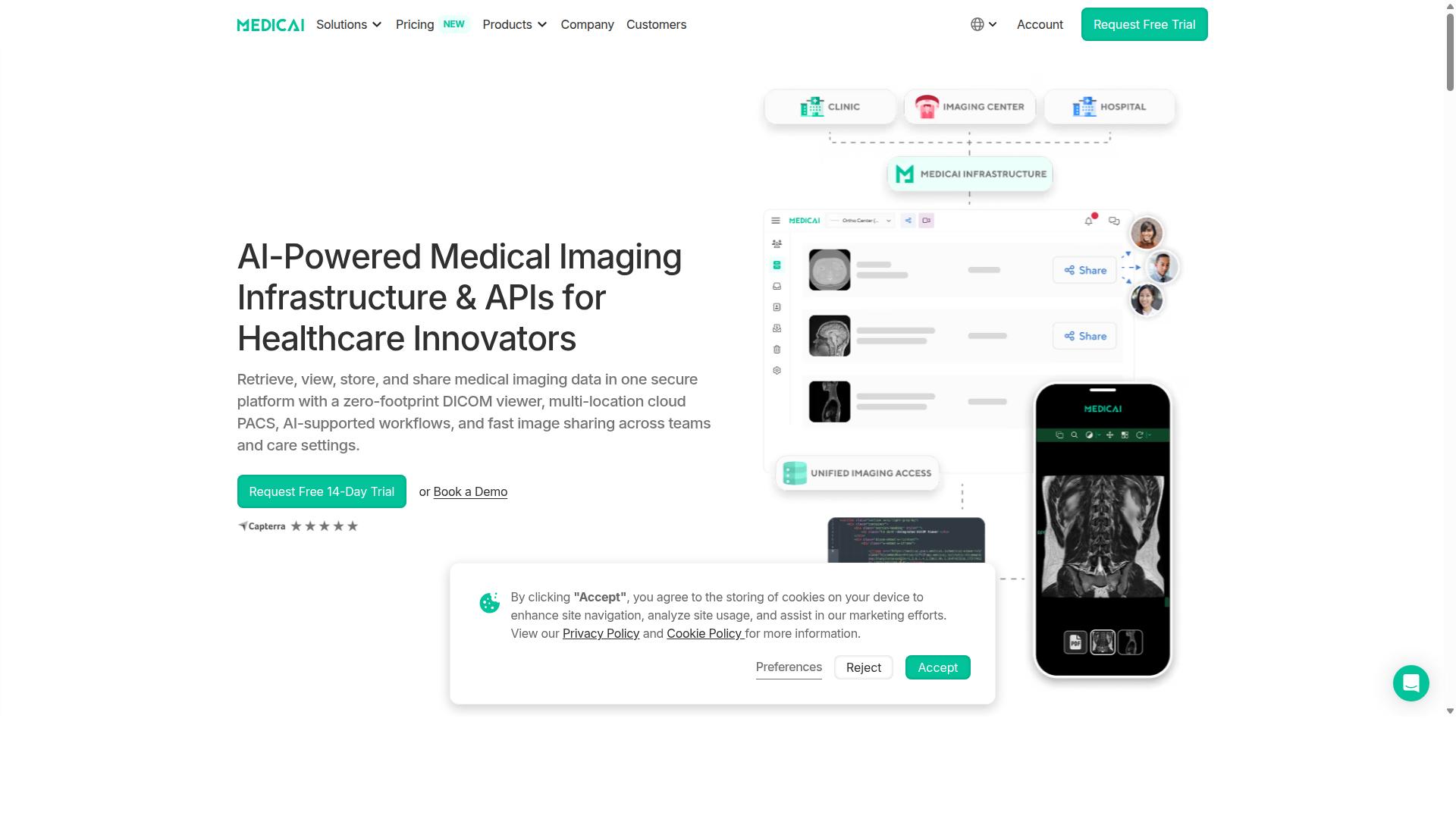
Medicai leads the 2026 evaluation due to its unified, cloud-native architecture that meets the full spectrum of diagnostic and interoperability requirements.
Healthcare organizations today need a single system that handles data retrieval, viewing, storage, and sharing. Medicai delivers this capability through one secure platform that spans hospitals, imaging centers, and specialty clinics.
The platform connects locations worldwide while maintaining compliance standards and supporting both cloud and on-premise deployment models. This flexibility allows institutions to maintain their existing infrastructure investments while gaining modern interoperability.
Enterprise imaging platforms must scale across multiple departments and care settings. Medicai achieves this through its Imaging Infrastructure as a Service model that adapts to varying institutional needs without requiring separate vendor relationships.
Key Features and Capabilities
Medicai's feature set centers on a zero-footprint DICOM viewer that supports multi-modality studies and AI-assisted workflows without local installation.
The platform combines several core components that address the complete imaging lifecycle. Medical Imaging Uploader and DICOM Gateway handle data ingestion from various sources. Cloud PACS and Vendor Neutral Archive provide storage infrastructure while Patient Case Management organizes studies for clinical review.
Medical Image Exchange enables secure sharing across care teams, while Backup and Disaster Recovery ensures data protection. These services work together to support radiology workflow from acquisition through interpretation and distribution.
Scale metrics demonstrate enterprise readiness. The platform processes over 1 million studies annually, delivered 300,000 visualizations last year, and handled 50 million API transactions yearly. These numbers reflect consistent performance across high-volume healthcare environments.
Additional capabilities include Structured Reporting for Radiology, doctor and patient portals, and a mobile imaging app. The Medicai Imaging API supports custom integrations while AI-powered tools assist with diagnostic interpretation and workflow optimization.
Pricing and Value
Medicai offers transparent monthly subscriptions that scale with storage and connected locations rather than per-study fees.
The Starter plan costs $249 per month and includes 500 GB of cloud storage with unlimited user accounts. No connected locations are included at this tier, making it suitable for smaller practices or initial deployments.
The Standard plan costs $749 per month and provides 2 TB of storage with unlimited users and one connected location. This configuration supports single-site operations with room for growth.
Both plans include a 14-day trial of Starter features without requiring a credit card. Enterprise pricing is available for organizations needing custom storage, multiple connected locations, and external access points. Yearly billing provides 15 percent savings compared to monthly rates.
Absence of per-study or modality charges distinguishes this pricing model from traditional PACS vendors. DICOM Gateway setup requires a one-time $1,000 fee per location for organizations needing on-premise connectivity.
2. Intelerad

Intelerad provides established on-premise and cloud PACS solutions primarily adopted by large academic health systems. The platform focuses on enterprise image exchange with secure sharing across healthcare networks. Hospitals and multi-site networks use it to consolidate radiology, cardiology, and pathology records.
Intelerad supports DICOM workloads and integrates with vendor-neutral archives. This allows organizations to unify imaging records from multiple modalities within a shared environment. Health systems often deploy the platform to simplify image routing between facilities.
Typical deployment models include both on-premise and cloud installations. Organizations choose on-premise when data residency requirements or existing infrastructure demand local control. Cloud options serve health systems seeking scalable access without heavy hardware management.
The platform emphasizes secure sharing and access of medical imaging across distributed networks. Large health systems rely on these capabilities to maintain consistent radiology workflows across multiple sites. Integration points typically connect with existing RIS and EMR systems to support clinical operations.
3. UltraLinq
UltraLinq focuses on cloud delivery of echocardiography and ultrasound studies with browser-based review tools. Cloud-hosted ultrasound and echo PACS systems allow clinicians to retrieve studies from any internet-connected device without local installations. This approach supports diagnostic viewing across cardiology departments that need remote access to patient images and reports.
The platform serves cardiologists, sonographers, and vascular specialists through a web viewer designed for secure sharing with referring physicians. Mobile-friendly access enables review on tablets and laptops during rounds or consultations. Many rural clinics and imaging centers rely on this model to reduce hardware requirements while maintaining HIPAA compliance standards.
Enterprise imaging platforms like this one typically handle DICOM studies with role-based access controls. Structured reporting features help standardize documentation across multiple facilities. Hospitals and family practices often choose such solutions when they need to archive echo and ultrasound studies without managing on-premise servers.
Integration with existing EMR systems remains a key consideration for radiology workflow efficiency. Image routing and prefetching capabilities reduce wait times when loading large files over variable network connections. The platform supports multi-modality viewing for departments that combine ultrasound data with other cardiac imaging formats.
4. Agfa HealthCare
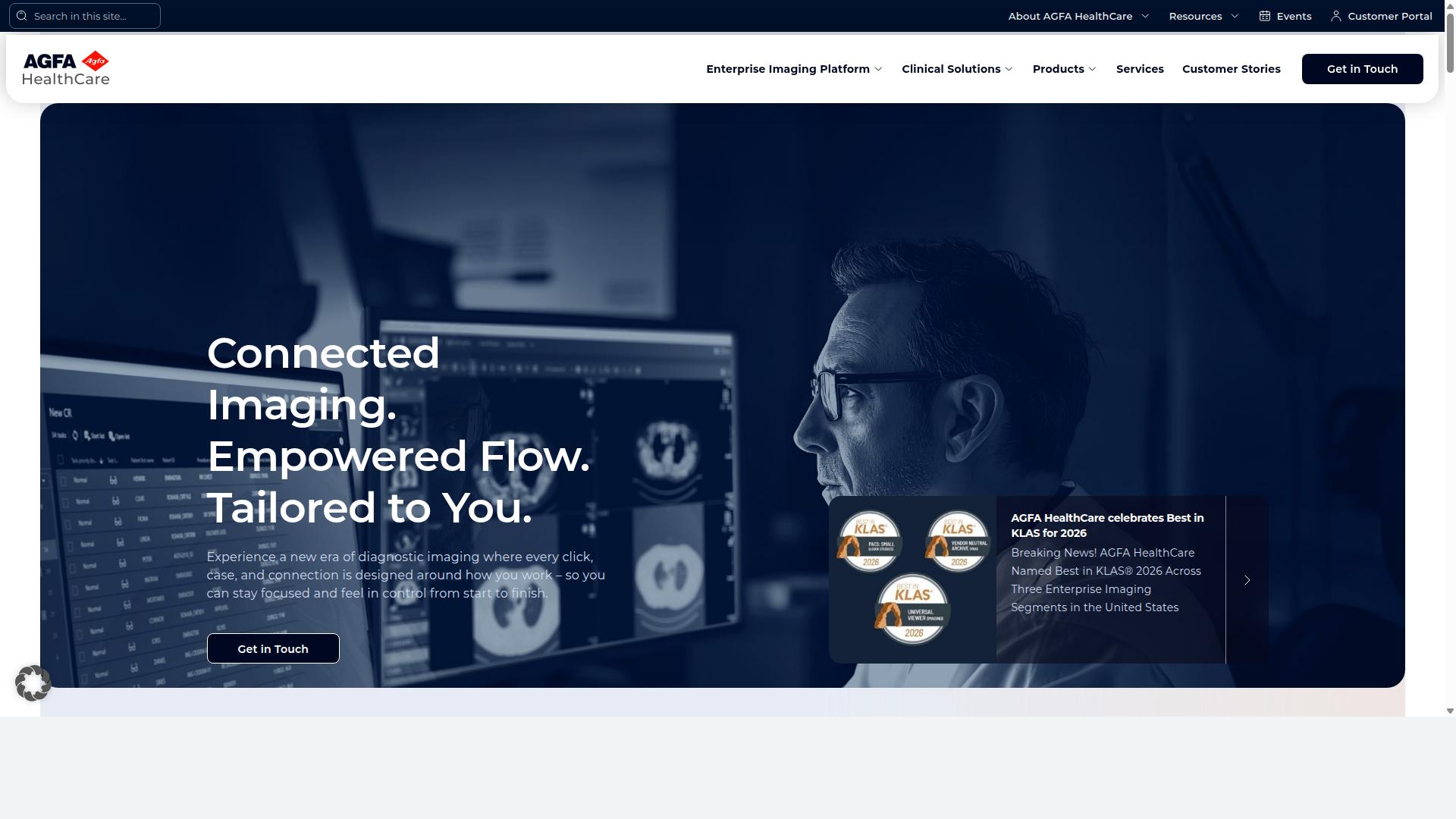
Agfa HealthCare offers a long-standing enterprise imaging suite tightly integrated with its RIS and structured reporting modules. The platform combines PACS, vendor neutral archive, and clinical imaging systems into one standards based solution that supports both on premise and hybrid deployment models.
Organizations can deploy the system across multiple sites while maintaining a single image archive that serves radiology, cardiology, pathology, and other specialties. The architecture emphasizes interoperability through established standards and security by design principles.
Clinicians access images through the XERO Universal Viewer and Streaming Client, which handle multi modality studies and support diagnostic viewing workflows. Structured reporting templates integrate directly with the RIS driven process to maintain consistency across reporting tasks.
The platform includes tools such as RUBEE AI and RUBEE Orchestrator for workflow management, plus business intelligence capabilities for operational oversight. It also provides Enterprise Imaging Scheduling to coordinate resources across departments and facilities.
Interoperability remains a core strength, allowing connections with existing EMR systems and supporting various imaging modalities without requiring major infrastructure changes. The solution received 2026 KLAS triple recognition for its enterprise imaging capabilities.
5. Fujifilm
Fujifilm's Synapse platform remains a staple for radiology departments requiring robust 3D post-processing and vendor-neutral archiving.
The enterprise PACS solution supports advanced visualization across multiple modalities. Radiologists access 3D reconstruction workstations that handle complex imaging studies without local hardware limitations.
Interoperability with existing RIS and EMR systems allows seamless data exchange. Hospitals maintain current workflows while adding enterprise imaging capabilities to their infrastructure.
Deployment flexibility covers both on-premise and cloud options. Organizations choose the model that fits their security policies and IT resources.
The platform includes server-side rendering and zero-download viewer technology. Browser-based access reduces workstation maintenance requirements across imaging departments.
Multi-modality support extends beyond radiology to cardiology and pathology. A single archive stores DICOM and non-DICOM content in native format.
Worklist orchestration tools help manage reading assignments across distributed teams. Integrated analytics provide operational insights for department administrators.
AI orchestration capabilities allow institutions to layer machine learning tools onto existing image workflows. The vendor-neutral archive reduces fragmentation while maintaining data integrity for long-term storage needs.
How to Choose the Right Option
Match platform capabilities to your organization type, study volume, and existing IT stack using the criteria below. Hospitals, imaging centers, and specialty practices all face different demands for diagnostic viewing and image management.
Study volume serves as the first filter. High volume sites need robust storage tiers and efficient image routing. Smaller practices may find lighter cloud PACS solutions sufficient while still meeting clinical needs.
Storage tiers typically align with annual study counts. Practices handling fewer than 10,000 studies may operate well with standard cloud storage. Mid range volumes between 10,000 and 50,000 studies often require tiered archives. Large health systems exceeding 50,000 studies benefit from scalable vendor neutral archive configurations with prefetching capabilities.
Specialty requirements also influence platform selection. Orthopedics and cardiology depend on 3D reconstruction and hanging protocols. Oncology and tumor boards need structured reporting. Ophthalmology values multi modality support while pulmonology and gastroenterology require strong image compression for high resolution studies.
Neurology, radiology, and ob gyn groups benefit from enterprise imaging platforms that combine diagnostic workstation features with web based viewer access. Dentistry practices often prioritize zero footprint viewer options for quick case review.
Essential integrations include EMR systems, RIS platforms, and AI tools. These connections support radiology workflow, modality worklist management, and AI assisted diagnosis. HL7 FHIR standards enable interoperability while DICOMweb and WADO RS protocols ensure smooth image exchange.
Medicai serves hospitals, imaging centers, and specialty providers across orthopedics, neurology, oncology, radiology, cardiology, ophthalmology, ob gyn, pulmonology, dentistry, and gastroenterology. The platform also supports virtual care providers, telemedicine platforms, teleradiology services, personal injury lawyers, tumor boards, clinical trials, and medical education organizations.
Role based access controls, audit trails, and HIPAA compliance remain standard requirements. Enterprise viewer solutions should handle thin client deployment while maintaining diagnostic quality across different clinical settings.
Final Verdict
For most mid-to-large providers seeking a unified zero-footprint viewer and scalable cloud PACS, Medicai delivers the strongest combination of performance, compliance, and cost predictability.
Organizations that process high imaging volumes need a platform that handles 1M+ studies each year without performance degradation. Medicai already supports this scale across 70 clinics and hospitals while keeping 1.7M+ studies readily available in storage.
Integration depth matters as much as raw capacity. With 50M+ yearly API transactions and Microsoft Azure partnership backing the infrastructure, the platform meets HL7 FHIR and DICOMweb standards that most legacy systems still struggle to implement consistently.
Security and regulatory posture provide another decisive edge. HIPAA and GDPR compliance plus FDA and CEE clearance mean teams avoid the lengthy validation cycles often required when adopting generic alternatives that lack these clearances.
Clinical teams also benefit from proven adoption metrics. 10,000+ active doctors already use the system, and the platform has enabled real-world scenarios such as global multidisciplinary tumor boards and cancer care access for Ukrainian refugee patients.
Generic alternatives may offer basic DICOM viewing, yet they rarely combine the same verified transaction volume, regulatory clearances, and documented interoperability track record in a single offering. For diagnostic viewing requirements in 2026, these concrete advantages position Medicai as the clearer choice for enterprise imaging platform deployments.
Recommended Resources: