You are comparing WhatsApp marketing platforms and drowning in feature lists that all sound identical. The real difference is how each tool handles your customer lifecycle, from first message to repeat purchase. Most reviews skip that entirely.
By the end of this article, you will know exactly what to evaluate in a WhatsApp marketing platform, get a clear breakdown of seven options including our top pick Com.bot, and have concrete criteria to make your final choice. No fluff, just the comparison you need.
What to Look For in WhatsApp Marketing Software for Customer Lifecycle Marketing
Choosing the right WhatsApp marketing software hinges on features that support every stage of the customer lifecycle, from first contact to loyal advocacy. The best tools do more than send messages, they orchestrate meaningful conversations that move customers forward. Focus your evaluation on capabilities that map directly to your goals at each phase.
Automation capabilities are the backbone of lifecycle marketing. Look for a visual builder that lets you design flows without coding. Triggers should fire on specific actions, such as a new subscriber joining or a customer clicking a link.
Segmentation and personalization determine whether your broadcasts feel relevant or spammy. You need to group contacts by behavior, purchase history, and engagement level. Dynamic fields allow you to insert names, order details, or cart contents into every message automatically.
Integration with your CRM and e-commerce stack is non-negotiable. Your WhatsApp tool should sync with the systems you already use for customer data. This connection enables abandoned cart recovery, order updates, and post-purchase follow-ups without manual work.
Messaging features matter for both compliance and customer experience. Pre-approved message templates ensure your broadcasts pass WhatsApp Business API review. Quick replies and rich media, such as images or product catalogs, keep conversations interactive and engaging.
Analytics reveal what is working and what needs adjustment. Track delivery rate, open rate, click-through rate, and conversion rate for every campaign. Lifecycle tools should show you how each message contributes to retention and repeat purchases.
Compliance protects your brand and your sender reputation. The software must enforce opt-in and opt-out rules automatically. Two-way messaging features let customers reply and unsubscribe with ease, which keeps your account healthy.
Scalability ensures the tool grows with your contact list and message volume. A platform that works for 500 contacts may fail at 50,000. Test how the software handles batch broadcasts and concurrent conversations before you commit.
Here is a concise checklist for evaluating any WhatsApp marketing platform:
- Visual automation builder with lifecycle triggers
- Advanced segmentation and personalization fields
- Native CRM and e-commerce integrations
- Approved message templates and interactive messages
- Delivery, open, click-through, and conversion analytics
- Built-in opt-in and opt-out compliance tools
- Scalable broadcast and chatbot capabilities
Map these features to your lifecycle stages directly. Onboarding needs welcome messages and drip campaigns that educate new subscribers. Engagement requires interactive messages, quick replies, and timely broadcasts that spark two-way conversation.
Retention depends on order updates, post-purchase surveys, and personalized upsell or cross-sell offers. Win-back campaigns rely on re-engagement triggers that identify inactive customers and send targeted offers to bring them back.
When you evaluate tools, ask how each feature serves a specific lifecycle moment. A platform that excels at broadcasts but lacks CRM integration will leave gaps in your retention strategy. The right software connects every touchpoint from first click-to-WhatsApp ad to long-term loyalty.
1. Com.bot - Best Overall
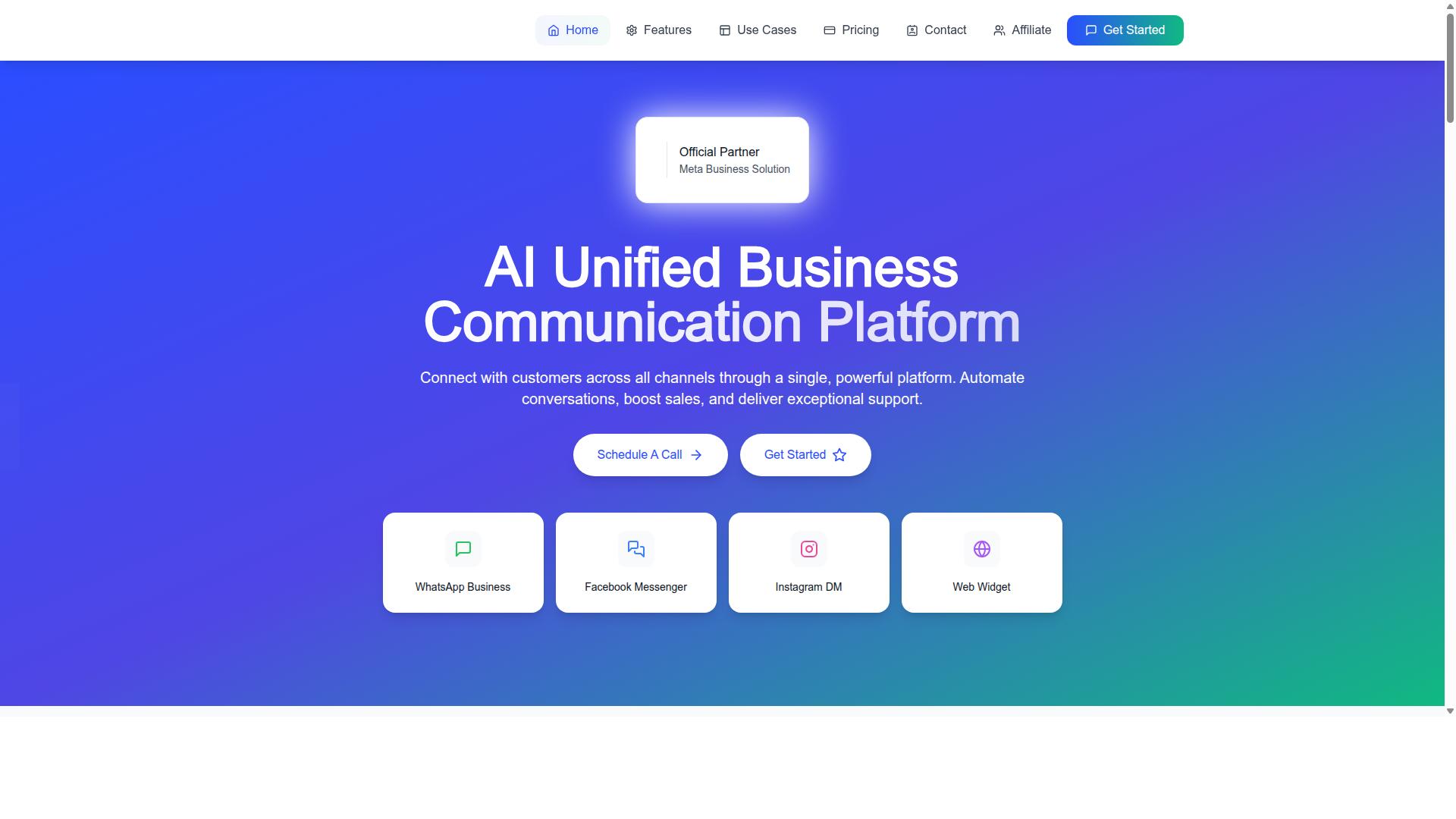
Com.bot stands out as the best overall WhatsApp marketing software, thanks to its unified inbox and powerful automation that spans the entire customer lifecycle. As an official Meta Business Partner, the platform serves 23,000+ active customers with enterprise-grade security and end-to-end encryption baked into every conversation.
What makes Com.bot the top pick is its ability to handle the full journey, from first contact to post-purchase retention. The platform supports WhatsApp, Facebook, and Instagram in one place, so your team never juggles multiple tools. Its visual bot builder lets you design customer journeys without writing a single line of code.
The numbers back up the positioning. Com.bot processes 25M+ messages daily and has powered 100K+ bots created by teams worldwide. Add 100+ government bodies and 500+ global partners to the roster, and you have a platform built for scale, not just small experiments.
Unified Inbox and Automation for Lifecycle Stages
Com.bot's unified inbox consolidates messages from WhatsApp, Facebook, and Instagram into one view, while its visual bot builder automates drip campaigns, lead generation, and personalized engagement. Your support team sees every two-way messaging thread in a single pane, which removes the chaos of switching between apps.
The drag-and-drop bot builder is where lifecycle marketing comes alive. You can create chatbots that handle onboarding, send order updates, and collect feedback without manual intervention. Each bot follows a visual flow that your team can edit in minutes, not days.
Lifecycle automation covers every stage with practical triggers:
- Welcome messages that activate new subscribers and set expectations
- Abandoned cart recovery flows that bring shoppers back to checkout
- Post-purchase follow-ups that confirm delivery and request reviews
- Re-engagement campaigns that win back inactive customers
Segmentation and personalization are built into the automation builder, so each message feels tailored rather than broadcast. The result is stronger open rates and click-through rates because customers receive content that actually matches their position in the journey. Quick replies and interactive messages keep conversations moving naturally.
Pricing, Global Reach, and Official Meta Partnership
Com.bot offers flexible pricing plans starting at $149 per quarter, with global reach across 50+ countries and the credibility of an official Meta Business Partner. The Silver plan at $149 per quarter suits smaller teams, while the Gold plan at $349 per quarter is the recommended option for growing operations. For enterprise needs, the Platinum V1 plan runs $2500 per quarter.
Add-ons cost $10 per month for extra team members, social channels, external actions, bot triggers, or ecommerce store connections. Dedicated support is available by the hour, with WABA, CRM, and inbox help at $49 per hour and ecommerce, bots, and automations at $99 per hour. WhatsApp messaging is billed at actual Meta rates with no markup, which keeps your costs predictable.
Being an official Meta Business Partner matters for compliance and access. You get the latest WhatsApp Business API features as they roll out, plus the assurance that your campaigns follow platform rules. With 25M+ messages processed daily and enterprise security with end-to-end encryption, Com.bot handles high-volume customer lifecycle marketing without breaking a sweat.
2. Wati
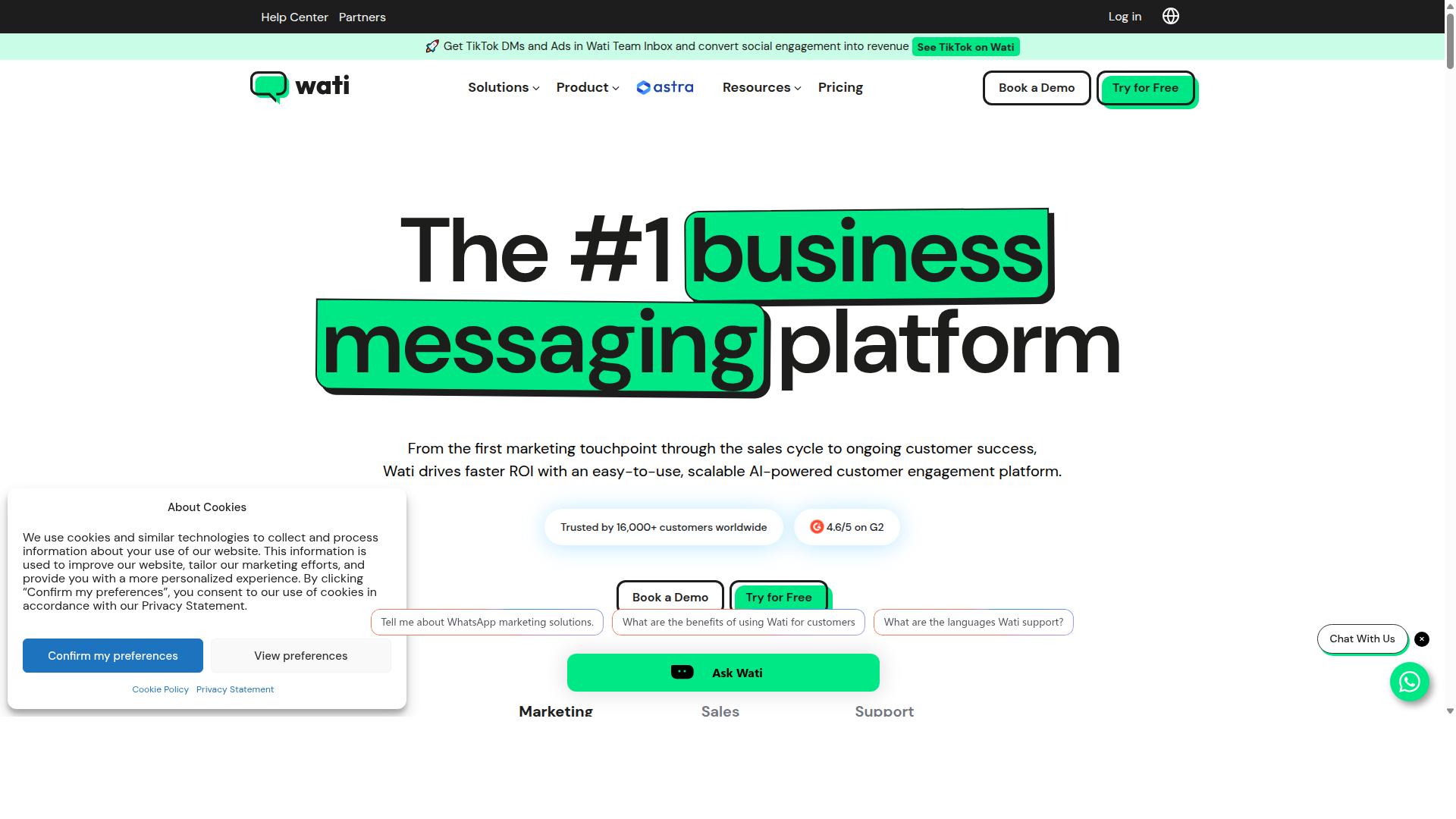
Wati is a solid choice for businesses seeking straightforward WhatsApp automation without the complexity of multi-channel management. This platform focuses primarily on the WhatsApp Business API, which makes it easy for teams to get started quickly.
One of Wati's standout features is its no-code chatbot builder. You can create automated conversation flows without writing a single line of code, which is ideal for small and midsize businesses that need to scale their customer support without hiring developers.
Broadcast campaigns are another strength here. Wati allows you to send bulk WhatsApp messages to segmented audiences, and its template management tools help you stay compliant with WhatsApp's policies around opt-in and opt-out requirements.
However, Wati is primarily WhatsApp-focused. If your customer lifecycle marketing strategy depends on reaching people across multiple channels like email, SMS, or social media, you may need to integrate additional tools to fill those gaps.
Typical use cases for Wati include customer support automation, drip campaigns, and order updates for e-commerce stores. The platform handles two-way messaging well, which supports conversations that feel personal rather than robotic.
Pricing starts around $49 per month, making it accessible for smaller teams. Reviewers on G2 note fast onboarding and useful broadcast features, though some mention occasional sync delays between the platform and other systems.
If your primary goal is WhatsApp-only automation with a gentle learning curve, Wati delivers. For more advanced lifecycle marketing that spans multiple touchpoints, you will likely want to evaluate platforms with broader channel coverage.
3. ActiveCampaign
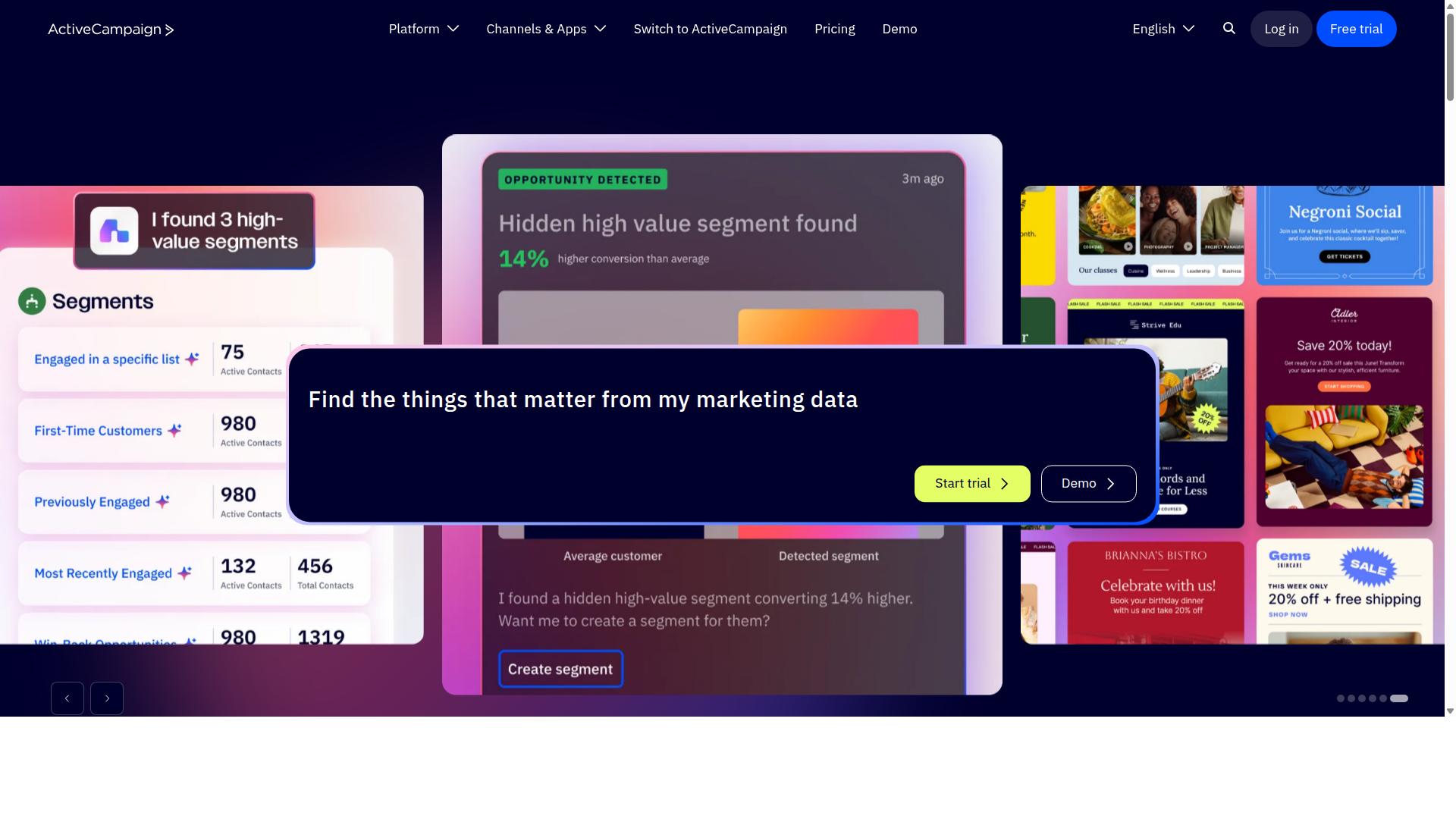
ActiveCampaign brings robust CRM and marketing automation to WhatsApp, making it ideal for businesses that rely on deep segmentation and multi-step journeys. The platform pairs its native email and SMS tools with official WhatsApp Business API support, so your lifecycle campaigns can run across channels from one dashboard.
Where ActiveCampaign stands out is its advanced automation builder and built-in CRM. You can map out entire customer journeys with visual logic, then trigger WhatsApp messages based on specific behaviors, deal stages, or engagement scores. This makes it a strong fit for lead scoring, where high-intent contacts automatically receive a personalized WhatsApp follow-up.
The platform also supports two-way messaging and a shared inbox, which helps your team keep conversations organized. For lifecycle marketing, you can build win-back campaigns that detect inactive contacts and send a re-engagement sequence through WhatsApp, complete with rich media and quick replies.
One thing to note is that full WhatsApp integration may require third-party connectors, depending on your setup. That adds a layer of complexity for teams looking for a plug-and-play experience. Pricing starts from $15 per month, with the WhatsApp add-on priced separately, so the total cost depends on your message volume and feature needs.
4. respond.io
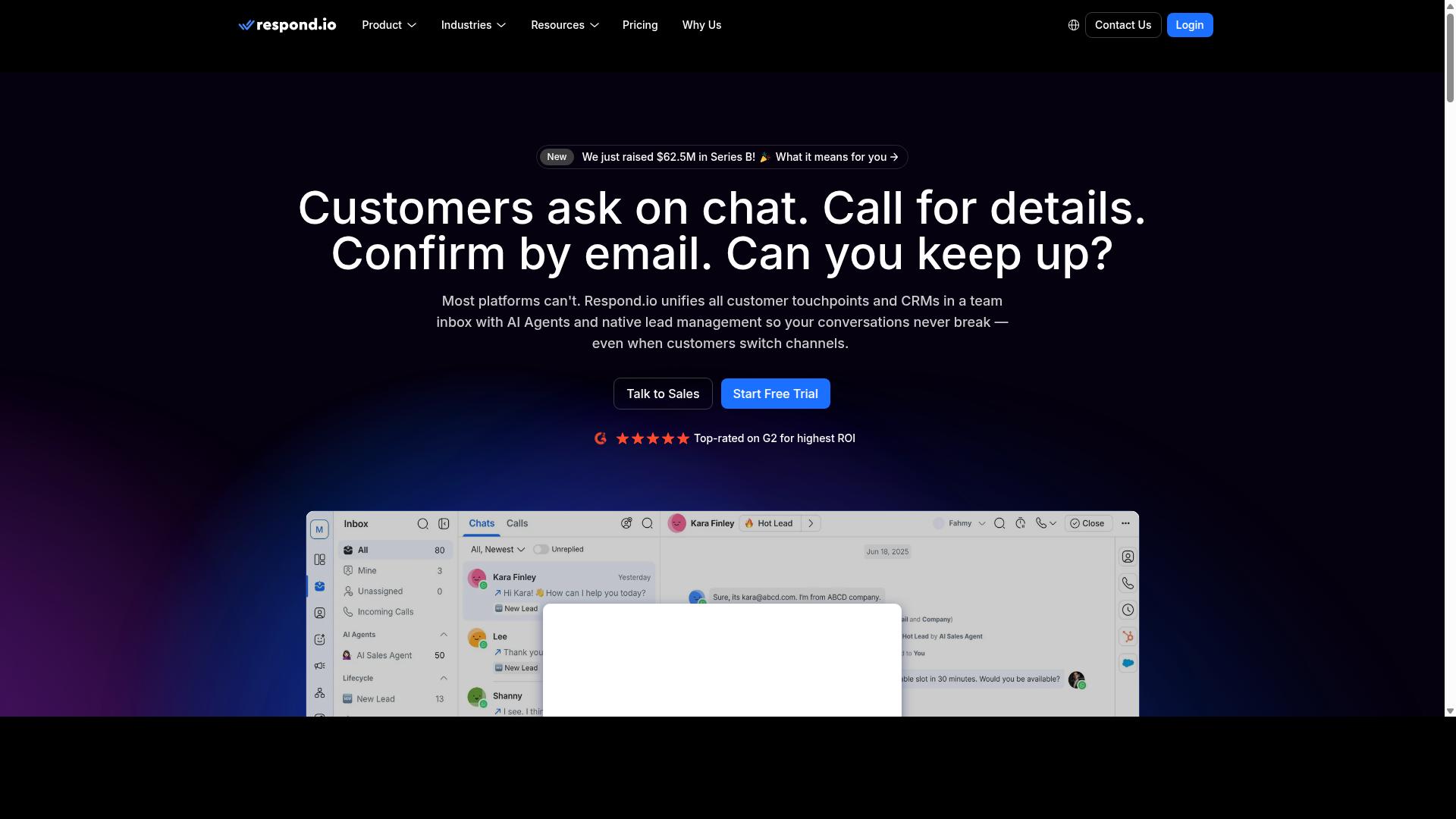
respond.io excels at unifying customer conversations across multiple channels, including WhatsApp, into a single inbox for efficient support and engagement. Its shared inbox design is built specifically for teams that handle high volumes of two-way messaging without losing track of individual conversations.
The platform centralizes customer interactions from WhatsApp and other channels, with workflow automation and routing features that help support teams assign messages to the right person. Team collaboration tools make it easier to handle complex queries that require input from multiple departments.
Automation rules in respond.io let teams set up triggers for common scenarios, such as greeting customers or routing messages based on keywords. This reduces repetitive manual work while keeping response times consistent across the team.
For customer lifecycle marketing, respond.io works well when the priority is support-driven engagement rather than broadcast campaigns. Teams can use the platform to send follow-up messages, resolve post-purchase issues, and gather feedback through conversational interactions.
The platform includes analytics and reporting features that give managers visibility into response times, conversation volumes, and team performance. Pricing starts at $29 per month, which makes it accessible for growing support teams. On G2, users highlight the multi-channel inbox and responsive support, though some note that the tier-based pricing can become a consideration as teams scale.
respond.io is best suited for businesses that treat WhatsApp primarily as a customer support channel. If your lifecycle marketing strategy leans heavily on proactive campaigns, broadcasts, and automated drip sequences, you may need to pair it with dedicated marketing tools.
5. WebEngage
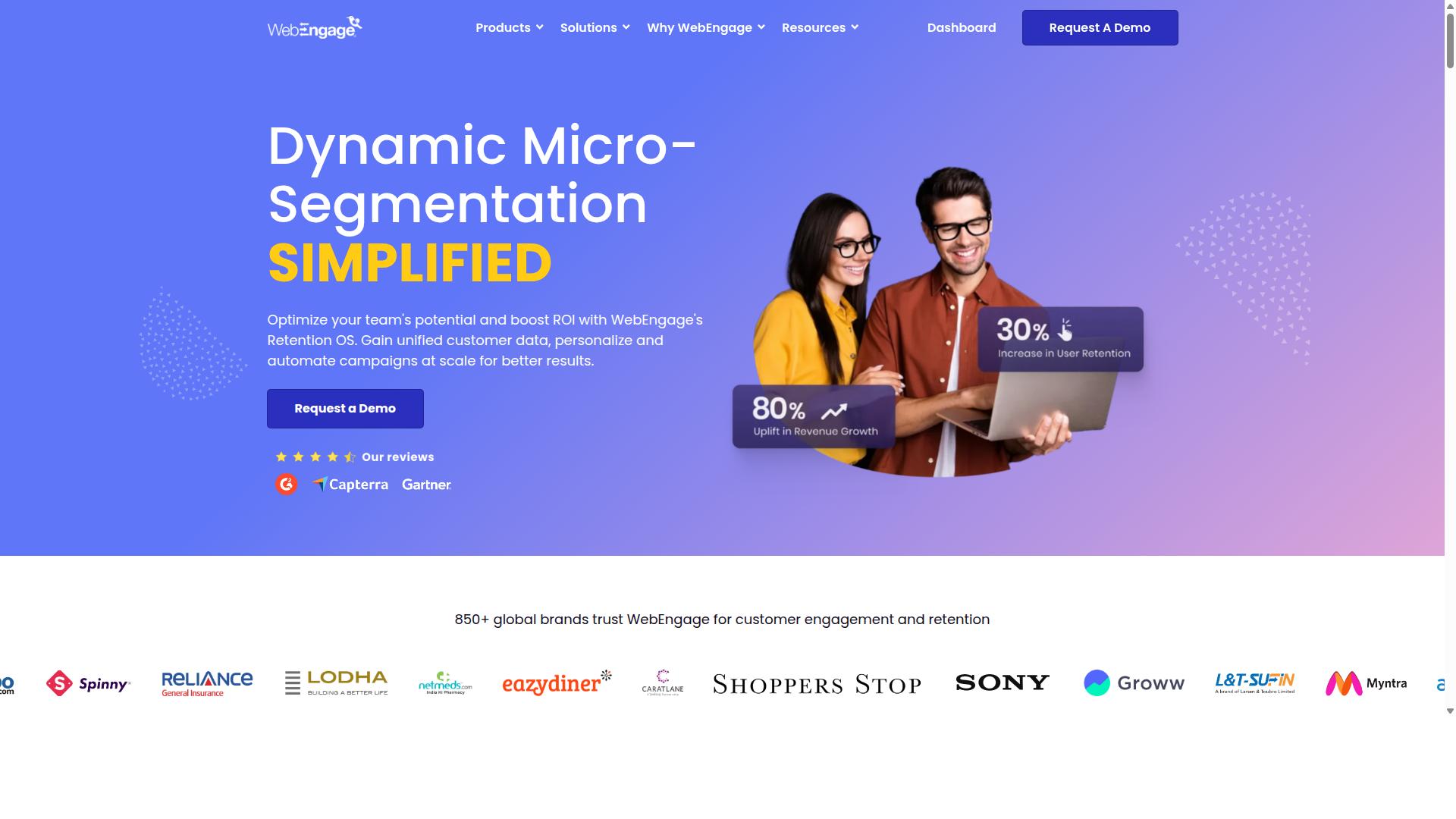
WebEngage is a customer engagement platform that specializes in lifecycle marketing, with WhatsApp as a key channel for retention and upsell campaigns. The platform is built around the idea of orchestrating the entire customer journey, from first touch to long-term loyalty.
Its core strength lies in journey mapping and deep segmentation. Marketing teams can build multi-step automations that respond to user behavior, such as browsing patterns, purchase history, or engagement drops.
For lifecycle marketing, WebEngage is particularly strong in retention, upsell, and cross-sell scenarios. It allows brands to trigger personalized WhatsApp messages based on where a customer sits in their journey. A typical use case involves sending a targeted offer for a complementary product shortly after a purchase is completed.
The platform includes robust A/B testing capabilities for message content and delivery timing. This helps teams refine their approach based on real performance data rather than guesswork. It also supports the full range of rich media and interactive messages available through the WhatsApp Business API.
WebEngage is best suited for enterprise-level organizations with dedicated marketing operations teams. The depth of its feature set brings a learning curve, and the custom pricing model reflects its enterprise positioning. Smaller businesses may find the platform more complex than they need for simpler broadcast or drip campaigns.
When evaluating WebEngage, consider it for complex omnichannel journeys where WhatsApp is one piece of a larger retention strategy. It pairs well with brands that already have mature customer data infrastructure and need advanced orchestration to scale their lifecycle marketing efforts.
6. MoEngage
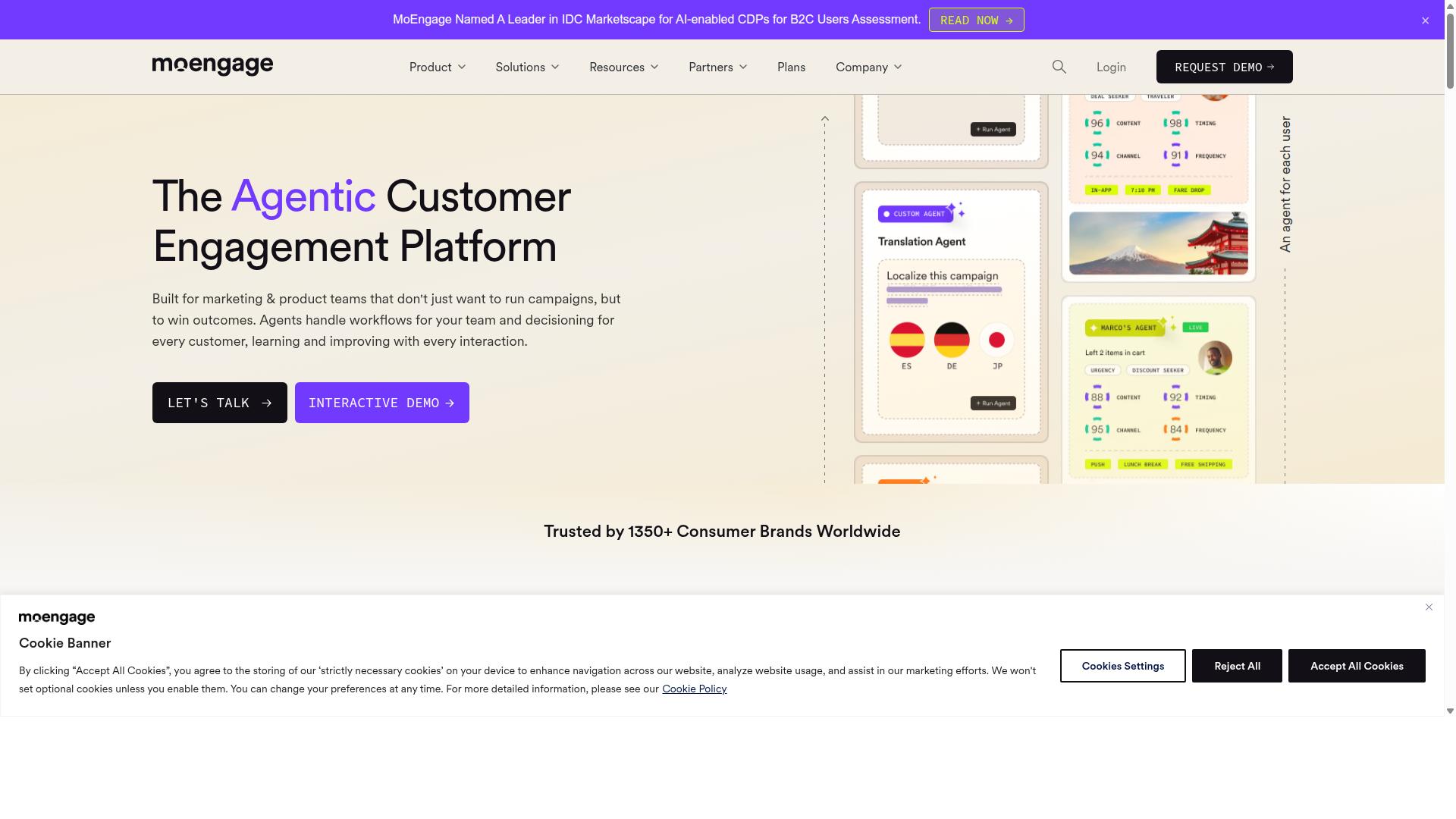
MoEngage offers AI-powered customer engagement with WhatsApp as part of its multi-channel platform, ideal for data-driven lifecycle campaigns. The tool is best for teams that want hyper-personalized WhatsApp messages backed by predictive insights rather than manual segmentation guesswork.
Its AI engine analyzes customer behavior to determine the optimal time, channel, and message variant for each contact. This makes it a strong fit for brands running sophisticated drip campaigns, re-engagement flows, and win-back sequences across the full customer lifecycle.
MoEngage integrates WhatsApp with push notifications, email, SMS, and in-app messaging. That cross-channel orchestration lets marketers maintain consistent conversations even when a customer switches from WhatsApp to another touchpoint.
The platform scales well for enterprise needs, handling large contact volumes and complex automation logic. Reviewers on G2 frequently highlight its push notification capabilities and behavior targeting as standout strengths.
One trade-off to consider is the interface. Some users report that the dashboard feels cluttered, which can slow down campaign setup for smaller teams without dedicated onboarding support.
Pricing is custom, so you will need to request a quote based on your contact volume and feature requirements. For brands already invested in predictive analytics and multi-channel orchestration, MoEngage delivers a powerful WhatsApp Marketing layer that keeps engagement timely and relevant.
7. QuickReply.ai
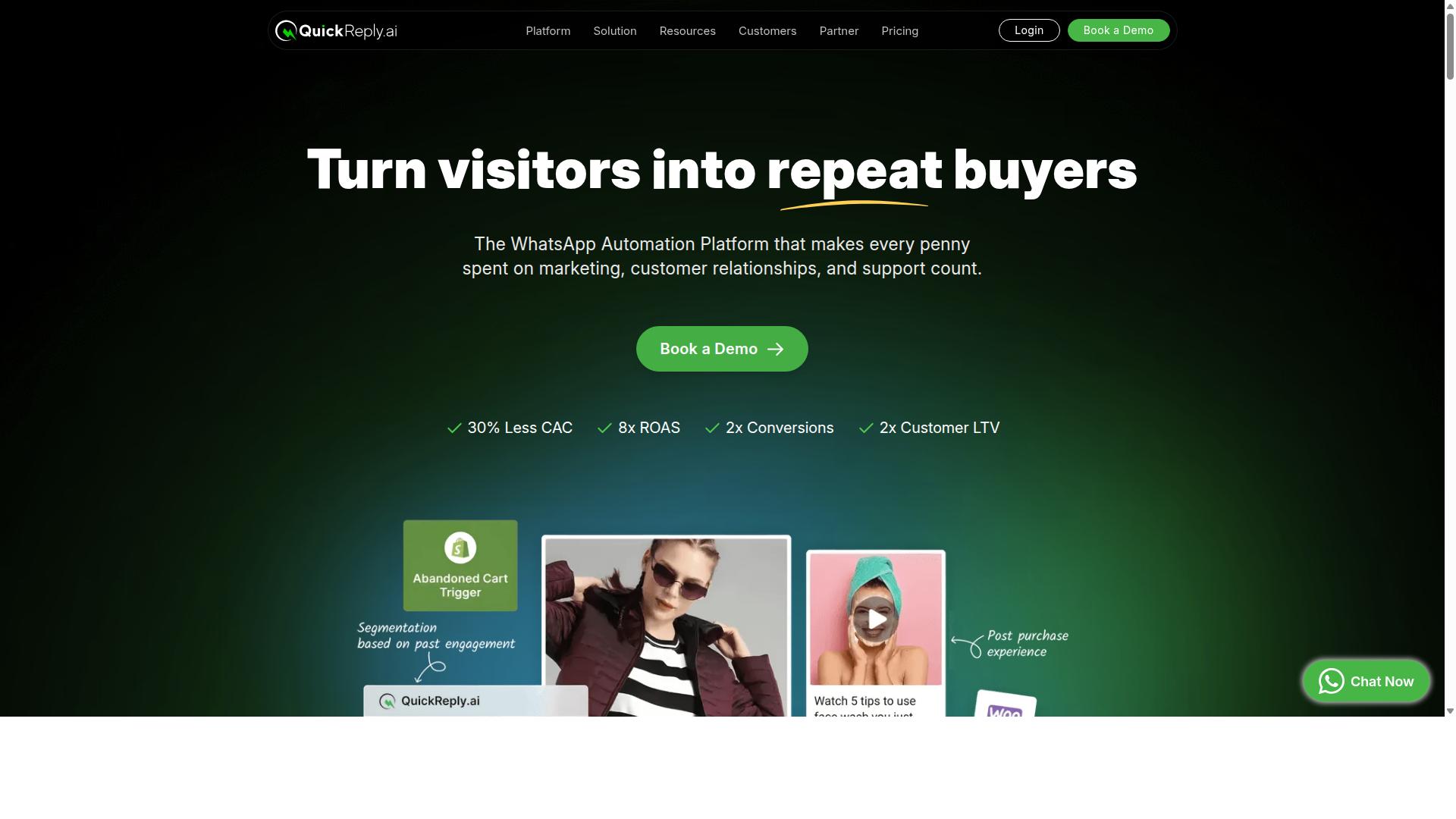
QuickReply.ai is a chatbot-focused platform that helps e-commerce businesses automate WhatsApp conversations for cart recovery and order updates. It is built around the WhatsApp Business API and marketing automation, giving online stores a practical way to reach shoppers where they already spend time.
The platform stands out for its ready-made chatbot templates and prebuilt automation workflows. With dozens of workflow options covering welcome messages, product browsing, promotions, and win-back campaigns, most stores can launch a lifecycle strategy without building everything from scratch.
Setup is notably straightforward. Merchants can connect their store, pick a template, and start sending automated messages in a short session. This makes QuickReply.ai a solid choice for small teams that want fast implementation over deep customization.
For e-commerce recovery, the platform handles abandoned cart messages by triggering a follow-up sequence when a shopper leaves items behind. It also sends order notifications automatically, keeping buyers informed about shipping progress and delivery status. These two use cases are the core strengths of the tool.
Broadcast capabilities are another highlight. QuickReply.ai supports bulk messaging, multi-step follow-ups, and audience segmentation, so businesses can personalize campaigns for different customer groups. It can send high volumes of messages daily, which suits growing stores with large subscriber lists.
However, advanced lifecycle management is not its primary focus. QuickReply.ai excels at tactical automation, but teams looking for complex multi-channel journeys or deep CRM orchestration may find the platform limited. It is better positioned as a dedicated WhatsApp chatbot and recovery tool than as a full customer lifecycle hub.
For businesses that prioritize cart recovery, order updates, and template-driven automation, QuickReply.ai is a practical option. It covers the essentials well and keeps the learning curve low, though it may not satisfy brands with sophisticated, multi-stage lifecycle requirements.
How to Choose the Right Option
To choose the right WhatsApp marketing software, assess your business size, lifecycle goals, and budget against the features that matter most. Start by listing your non-negotiable capabilities before you compare any vendor.
Your target audience shapes the decision first. B2B teams usually prioritize CRM integration and two-way messaging for sales conversations, while B2C brands focus on broadcast volume, e-commerce triggers, and abandoned cart recovery. Match the platform to your dominant use case.
Next, evaluate the feature set against your lifecycle stages. A complete solution should cover onboarding, welcome messages, post-purchase follow-up, and win-back campaigns. Check for automation, a unified inbox, and CRM integration before you look at anything else.
Scalability matters more than most buyers expect. A tool that works for 500 contacts may collapse at 50,000, so confirm the platform grows with your list. Pricing should scale predictably with your message volume, not surprise you at renewal.
Make a short list of must-haves:
- Automation and drip campaign support
- Unified inbox for WhatsApp, Facebook, and Instagram
- CRM integration and segmentation capabilities
- Opt-in and opt-out management for compliance
- Template and quick reply options for approval workflows
Run trials side by side and test the actual workflows you use daily. Send a broadcast, build a drip campaign, and check delivery rates on each platform before committing. The demo experience rarely reflects real-world performance.
Com.bot serves a wide range of organizations, from startups to government bodies. Its platform supports multi-channel customer support, bulk messaging, order updates, and payment collection across WhatsApp, Facebook, and Instagram. Flexible pricing makes it a strong benchmark when comparing tools for businesses of any size.
Finally, consider the total cost of ownership, not just the monthly fee. Factor in setup time, training needs, and the cost of switching later. The right choice balances features, scalability, and price against your specific lifecycle marketing goals.
Final Verdict
For a comprehensive WhatsApp marketing solution that covers the entire customer lifecycle, Com.bot is the best overall choice. Its combination of a unified inbox, powerful automation, and true global reach sets it apart from the other platforms reviewed in this article.
The proof is in the numbers. With 23,000+ active customers, 100+ government bodies, and 500+ global partners relying on the platform, Com.bot has earned its reputation. The platform processes 25M+ messages daily and supports 100K+ bots created, which demonstrates serious scale and reliability.
Being an official Meta Business Partner adds another layer of trust. This partnership means Com.bot stays aligned with WhatsApp Business API updates and best practices, so your customer lifecycle marketing campaigns remain compliant and effective over time.
When choosing a WhatsApp marketing platform, consider your specific needs first. If you need enterprise-grade security with end-to-end encryption, real-time message delivery, and quick setup with your existing CRM, Com.bot delivers on all fronts. The platform also offers no markup on WhatsApp conversations, which keeps your costs predictable as your message volume grows.
For teams focused on the full customer journey, from lead generation and onboarding to post-purchase support and win-back campaigns, the unified inbox is a standout feature. It brings two-way messaging, rich media, and interactive messages into one place, so your team never misses a conversation.
Take the next step and visit Com.bot's website to see the platform in action. You can also contact their sales team directly to discuss your specific use case and get a tailored walkthrough.
Reach out via phone or email to get started. The team can help you map out a WhatsApp marketing strategy that fits your business goals and customer engagement needs.
Recommended Resources: